Work
Captain Cycles
14 May 2026
A service site offering different packages and repairs for bikes of all sorts.
Background
Captain Cycles was a project for a client who needed a simple, easy‑to‑manage website to advertise bike repair services. They didn’t want anything complicated — just something clean, clear, and reliable that they could update themselves without worrying about breaking something and compromising the site. With that in mind, I kept the design lightweight and straightforward so the upkeep would stay stress‑free.
Onboarding & Early Ideas
The brief was basically:
- ‘We need a website for our bike business’
- ‘Use whatever method you deem correct’
- ‘We need to be able to add content’
I put together a few mockups exploring layout, colours, and general vibe. Once I sent them over, they picked the one that matched what they had in mind.
Final design
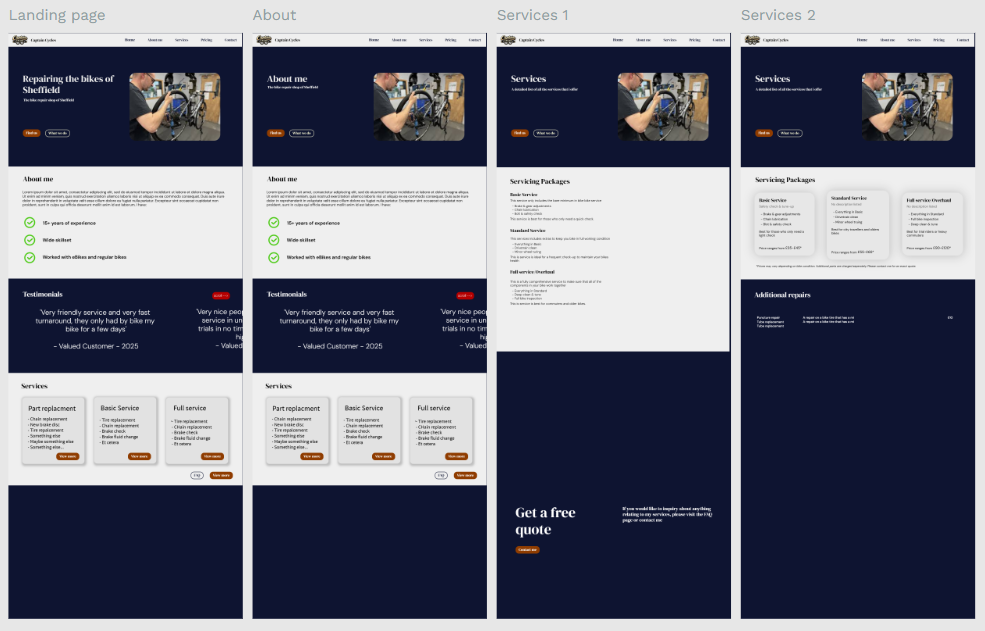
As you can see, they were not finished but due to time constraints I had to begin the build process.
Design & Build
I built the site in WordPress, using the client’s copy as the foundation. To keep everything on‑brand and avoid the bloat of pre‑made themes, I created a custom theme based on their colours and style primarily from their logo. The goal was to make something they could easily tweak without digging through complicated settings.
A few things I focused on:
- Keeping the layout clean and easy to navigate
- Making sure the client could update text and images themselves
- Avoiding unnecessary plugins
- Ensuring the site worked smoothly on mobile
Since this was a portfolio project and done at no cost, I gave them a final review round with free adjustments so they could fine‑tune anything before launch.
Final website
Note: As the client has control of the website, I only take credit for the site in the state at launch.
Hosting & Deployment
For hosting, I recommended Bluehost — it’s reliable, affordable, and easy to use, regardless of your level of technical experience.
The setup process was straightforward:
- Uploaded the site files through Bluehost’s file manager
- Unzipped the package on the server
- Updated URLs and configuration settings
- Finished the WordPress setup and activated the custom theme
To help them with SEO, analytics, and reviews, I installed:
- Site Kit for Google Analytics/Search Console
- Yoast SEO for basic optimisation
- TrustIndex to display customer reviews in a clean widget
These gave the client the essentials without overwhelming them with too many tools.
Outcome & Key takeaways
Outcome
The finished site gave the client a professional web presence they could manage themselves — clean, on-brand, and built without unnecessary complexity. This was my first full handover, and it made clear how important structured onboarding is.
Key takeaways
Due to the simplicity of the site, I focused on my interactions with the client, making sure they were fully involved every step of the way, and letting them weigh in at key steps. I also strengthened my adaptability throughout the project. At times, the client needed more time to respond or provide information due to other commitments, so I learned to make the most of my time by progressing with the elements I could. I worked flexibly, often moving forward without full design mockups or final copy while still meeting deadlines without compromising the concept. Most importantly, I ensured the client stayed informed and involved as the project progressed.
Hindsight
In hindsight, I would have definitely changed the way I handled onboarding. I initially sent them a quick form, no longer than ten brief questions, but I would now say that a meeting would be more effective. It is something that cannot be overlooked, and the client can share in much greater detail, their ideas.
Also I would have changed the way I taught them to use WordPress. In this instance, as the ultimate goal was for them to take full ownership of the site and handle the content changes, I would have worked with them, as the first large content changes took place, I would have helped them through it. This would mean they would learn better than me teaching them at a separate time.